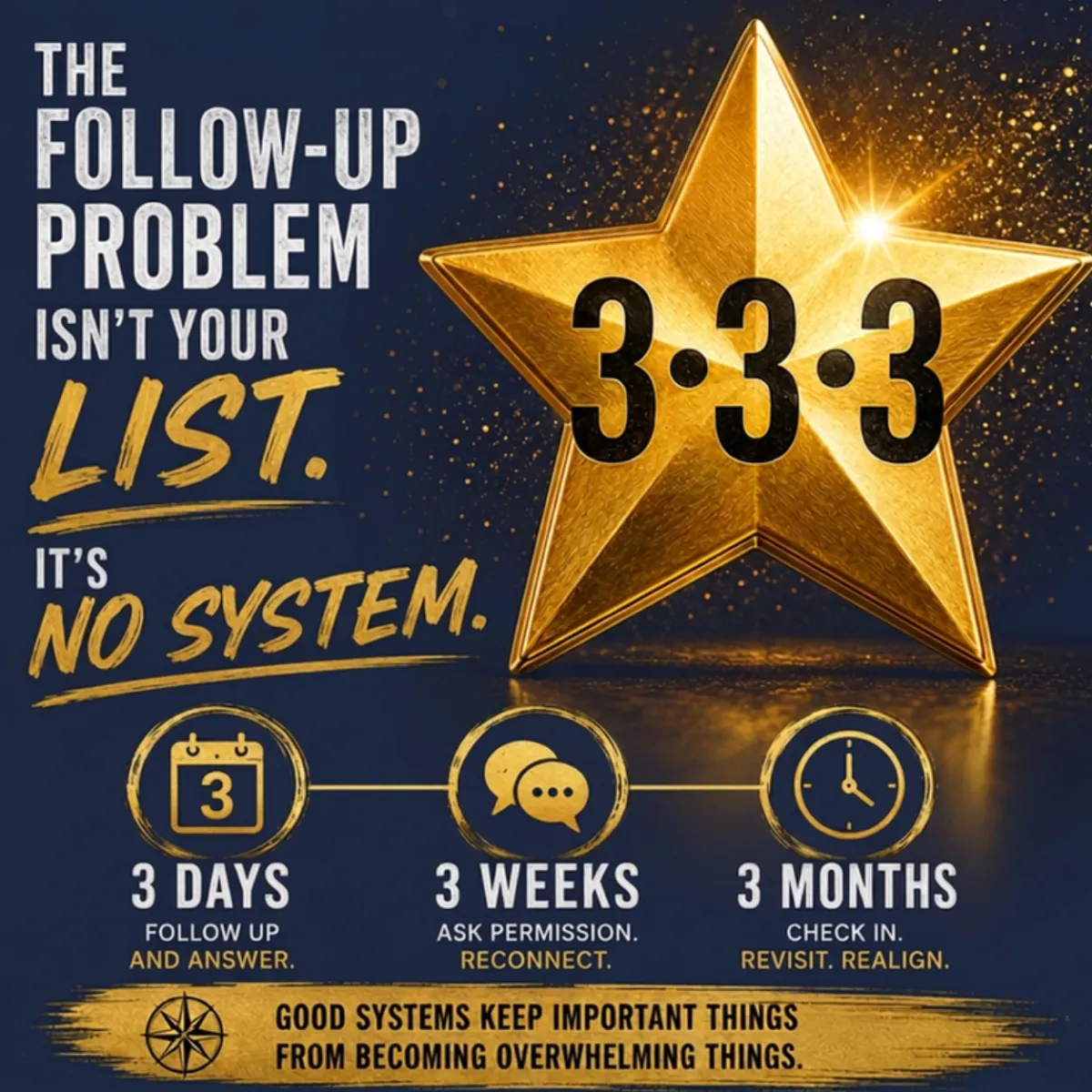
Dental Treatment Follow-Up: The 3-3-3 System
The Follow-Up Problem Isn’t Your List. It’s No System.
There’s a moment in almost every dental practice when someone runs the unscheduled treatment report and thinks:
How did this list get so big?
Dental treatment follow-up can be hundreds of patients. Thousands—sometimes hundreds of thousands—of dollars in diagnosed treatment sitting there. And suddenly, “work the unscheduled treatment list” becomes a project no one wants to tackle. But the size of the list isn’t really the problem. The problem started long before the list got big. There was no system for what happened next. A patient was presented with treatment and said: “I need to think about it.” “I need to talk to my spouse.” “I need to figure out the finances.” “Let me check my schedule.” All perfectly reasonable answers. We have ALL heard them more than once.
Then the team moved on to the next patient, the next phone call, the next insurance question, the next thing demanding their attention. And the treatment plan quietly became another name on a report. This is why the 3-3-3 System was created in my practices.
Follow-Up Shouldn’t Depend on Memory
Years ago, I started using a very simple system for treatment follow-up. I called it 3-3-3. Nothing fancy. No complicated spreadsheet. No aggressive sales tactics. Just a defined next step that flows like this:
3 Days
Give the patient a few days to think. If they needed to discuss treatment with their spouse, investigate financing or simply process what they heard, give them that space. Then follow up. Not to pressure them. To answer questions and help them determine their next step. The day the treatment is presented you ASK PERMISSION to reach out to them in a few days to follow up. Usually they say, sure! Sometimes they say, "No, I'll call you". That's when you know they haven't owned the problem yet or they aren't serious about actually treating the diagnosed condition.
3 Weeks
Still not ready? Ask questions, for clarification. It could be fear, it could be financial, you need to listen to what they aren't saying just as much as what they are telling you. Ask permission to follow up again in a few weeks. I've even asked how much time they need? That little piece matters.
Permission changes the conversation.
Instead of the patient feeling chased, they know someone is going to reconnect with them because you agreed to do so. That feels very different from a random “just checking in” phone call.
3 Months
If treatment still hasn’t been scheduled, follow up again around three months. For many patients, you’re now approaching their next hygiene or continuing-care cycle anyway. That creates another natural opportunity to revisit the diagnosis, answer questions and determine whether something has changed. And then the process continues appropriately from there.
Good Systems Keep Important Things From Becoming Overwhelming Things
That’s really the point of 3-3-3. It isn’t about calling patients more often. It’s about creating structure around something important.
When every patient leaves with a defined next step, you don’t have to periodically discover a giant list and ask someone to “work it.”
Because here’s the problem with that instruction:
Where do they start?
The newest patient? The largest treatment plan? The person who hasn’t been contacted in six months? The 200 names staring back at them from the report? Now you’ve turned routine follow-up into an overwhelming project. And overwhelming projects have a funny way of getting pushed to tomorrow.
Treatment Acceptance Doesn’t Always Happen in the Consultation Room
Sometimes we put too much pressure on the treatment presentation itself. Yes, communication matters.
Yes, patients need to understand the diagnosis, the recommended treatment and why it matters. But patients are human.
Sometimes they really do need time. The goal isn’t to force a decision before they walk out the door.
The goal is to make sure “I need to think about it” doesn’t become the end of the conversation.
That’s where follow-up becomes part of patient care. You aren’t simply trying to fill the schedule. You’re helping someone move forward with treatment that has already been diagnosed. There is an important difference.
Before You Work the List, Fix the System
If your unscheduled treatment report has become enormous, absolutely work it. There may be significant opportunity sitting there.
But don’t stop there. Ask a better operational question:
What needs to happen today so we aren’t looking at another overwhelming list six months from now?
Assign ownership. Define the follow-up intervals. Document the conversation. Create the next action.
Measure what is happening. Because a healthy dental practice shouldn’t depend on someone remembering to circle back when things slow down. Things rarely slow down.
The follow-up problem isn’t your list. It’s no system.
And sometimes the difference between hundreds of forgotten treatment plans and consistent patient follow-through is as simple as: